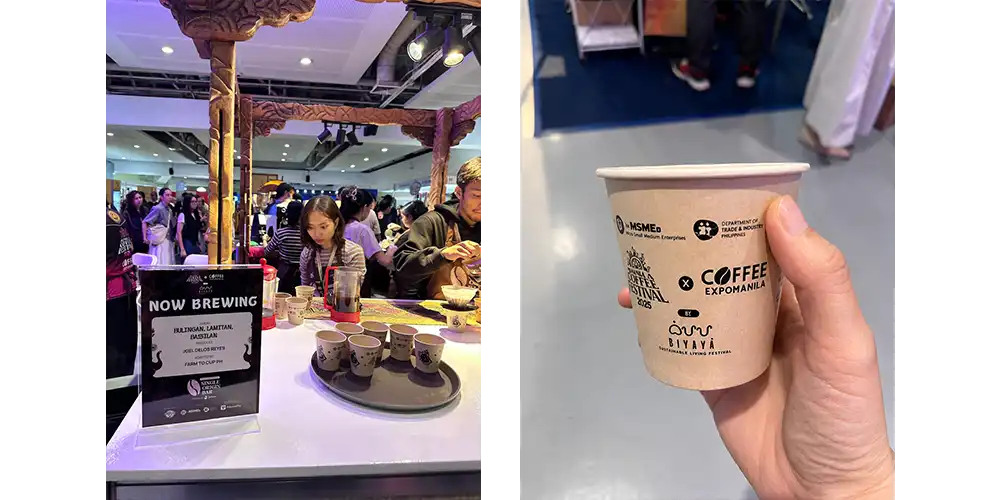
Last weekend, SM Megamall hosted something called the BIYAYA Sustainable Living Festival — three days, Friday through Sunday. I went on the final day. I was there for the coffee, but what I found was a lot diverse and more interesting than a coffee expo.
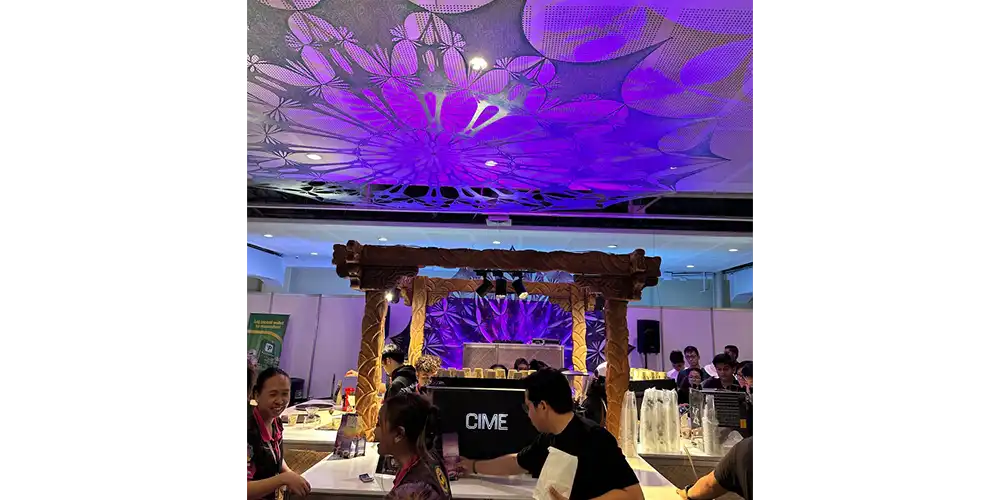
Entrance was 350 pesos a day. A bigger coffee event back in June had charged 650 pesos, and I’d missed that one due to a scheduling conflict, so I wasn’t expecting much from this one at less than half the price.
What “Biyaya” Means
Biyaya is Tagalog for “blessing” or “bounty.” True to the name, the booths were built around the idea of natural abundance and sustainable everyday living — everything from coffee to indigenous crafts to leather goods.
The Coffee, First
Coffee was the headline act. Local and international roasters, tastings all around. One of the booths was run by a roaster visiting from Kyoto, Japan — apparently they travel to coffee events all over the world.
Philippines is one of the few countries in the world that grows all four major commercial coffee species — Arabica, Robusta, Liberica (locally called barako), and Excelsa. Despite that, its coffee still isn’t well known internationally, and it’s not purely a visibility problem. Honestly, there are real quality-chain issues too — inconsistent bean sizing, insufficient processing and drying facilities, labor shortages, and logistics gaps. It’s not just about recognition; it’s also about production and supply-chain infrastructure that hasn’t fully caught up. Which is part of why a company like Eighty Plus, which I’ll get to, matters so much.
The Booth That Stood Out: Eighty Plus
Out of everyone there, the booth that stuck with me most was Eighty Plus — a company that works between farmers and buyers, sourcing and grading beans and handling the wholesale side. Think of them as the industry’s quality gatekeepers.
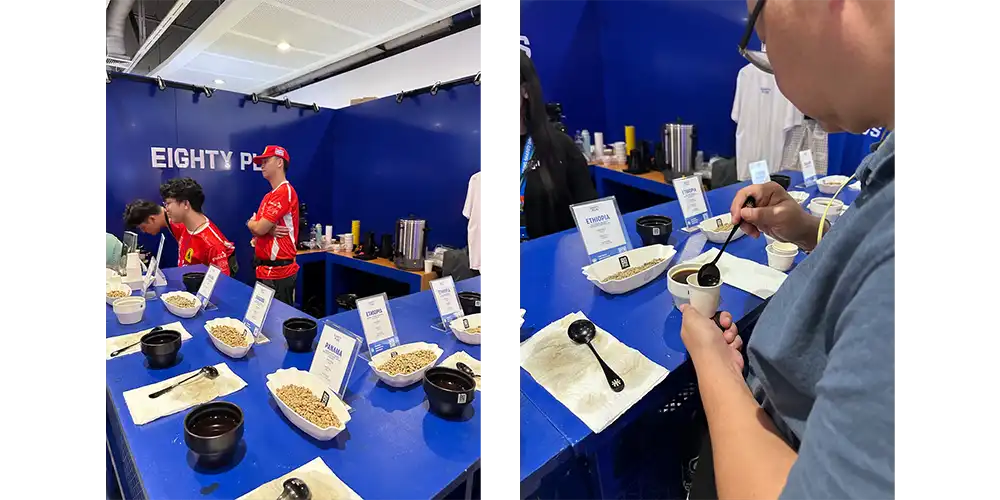
What made them different: they were the only booth doing an actual cupping session — the formal method coffee professionals use to evaluate quality — rather than just pouring samples.
The setup was small bowls, ladled out. Not what I expected. Every other booth was handing out hot, fresh-brewed coffee in tiny paper cups, so I’d assumed that was just how tastings worked. Getting a lukewarm bowl instead threw me for a second.
But once I actually tasted it, the flavor came through with surprising clarity. “Good coffee tastes good even cold,” as the saying goes — I got to experience that firsthand.
What Eighty Plus Is Actually Trying to Do
Strip it down, and what Eighty Plus does is simplify the chain between farmer and buyer.
It reminded me of the cacao industry in Ghana — the Philippines grows cacao too, and from what I understand, there’s a similar problem: too many middlemen between farmer and final buyer, each one taking a cut. Nothing illegal about it, just a supply chain where fair trade isn’t really functioning the way it’s supposed to.
Coffee has a version of the same structure, and Eighty Plus seems to be positioning itself as the company trying to cut through it.
Filipino coffee farmers are having a rough time right now. Climate change is hitting yields, fewer people want to take over family farms, and government support is thin — which makes it hard to invest in improving bean quality even when farmers want to. I heard some of this directly from the owner of a coffee shop near where I live in Amadeo, a coffee-growing area in Cavite.
That context made Eighty Plus’s presence feel more important than “just another vendor.” And it made their cupping setup read less like a gimmick and more like an actual statement of respect for the beans and the people who grew them.
It also got me thinking about the “free unlimited samples in paper cups” approach everywhere else. There’s an argument that this reflects how coffee appreciation, as a culture, still hasn’t fully taken root among everyday Filipino consumers — free-and-unlimited is an easier sell than “taste this carefully and form an opinion.”
Though to be fair, that’s probably as much about business model as culture. Eighty Plus is B2B — sourcing for roasters and buyers — while most of the other booths were consumer-facing retail brands doing branding and sampling. Cupping is a trade tool more than a consumer one, in most countries. It’s likely both things are true at once: the B2B/B2C split explains a lot, and a market where more everyday drinkers cared about nuance would probably see more consumer-facing tasting flights too, not just free pours.
I mentioned the cupping experience to my husband Ryan afterward, and he made a good point: Filipinos tend to want sugar in everything, coffee included, so watching people drink it black during a formal tasting session basically turns everyone into a temporary “expert,” whether they meant to or not. Watching people who normally drink very sweet coffee taste it seriously, unsweetened, was a small but genuine surprise.
Local Beans vs. Everyone Else
Some booths clearly cared about local provenance. There were beans from Sagada, Atok, and Apo — well-known Philippine coffee-growing areas. Beanhi, a Marikina-based shop, was selling Mindanao-origin beans.
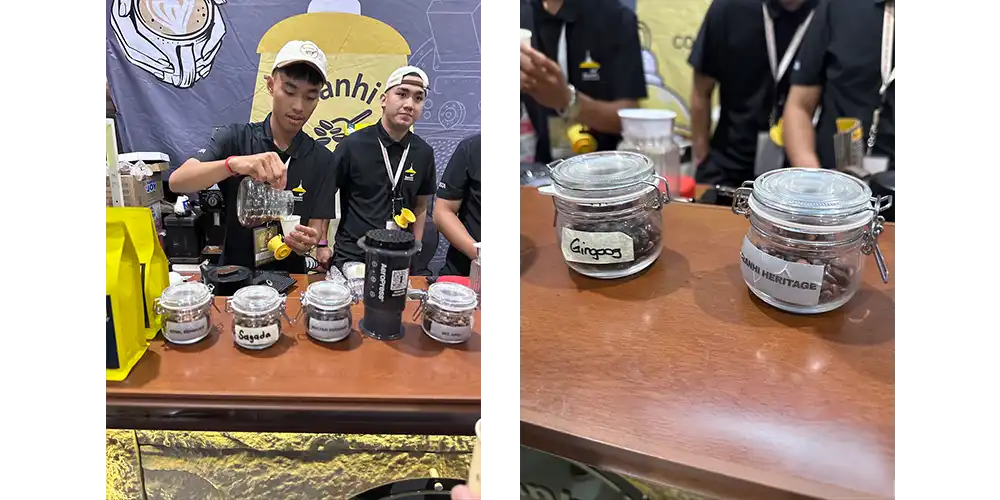
But overall, foreign-origin beans dominated the floor — Liberica, Panama, Ethiopia, Thailand. For an event happening in a country that actually grows coffee, it was a strange thing to notice.
Then again, “mostly foreign varieties” is really just how coffee works everywhere. The coffee plant itself isn’t native to the Philippines at all — Coffea originates from the Ethiopian highlands, and it reportedly arrived here in 1740, when a Spanish Franciscan friar brought Arabica seedlings via the Mexico galleon trade to Lipa, Batangas. Brazil, Colombia, Vietnam — every major coffee-producing country started the same way, with someone else’s plant.
Coincidentally, the first coffee ever planted in Cavite was in 1876, in Amadeo — the town I live in now. The cultivation techniques spread over from Batangas, and Amadeo happened to be where it landed first in this province.
I also finally understood why Amadeo’s own beans don’t show up much at conventions like this one. High-quality specialty coffee, Arabica in particular, is generally grown at elevations of roughly 1,000–1,800 meters. The Sagada beans I saw at the festival fit that profile exactly — Arabica, Typica variety, grown at around 1,300–1,400 meters. Amadeo, by contrast, sits at about 330–570 meters — closer to the sub-600-meter range that actually favors Robusta. Great history, great soil, but altitude alone makes it a tough sell as “specialty” in this kind of setting. That lower elevation probably also means less of the floral, delicate character that lends itself to light roasting — which tracks with what I saw on the floor: the beans being positioned as premium mostly leaned light-roast and floral, closer to tea than to the darker, heavier roasts I’m personally used to.
Not Just Coffee: The Cordillera Corner
What surprised me most was how much the event wasn’t about coffee. A whole section was dedicated to the Cordillera mountain region — woven and knitted crafts, regional specialty foods like sausages, and a booth doing traditional tattooing.
Kalinga’s Traditional Tattoos: Batok
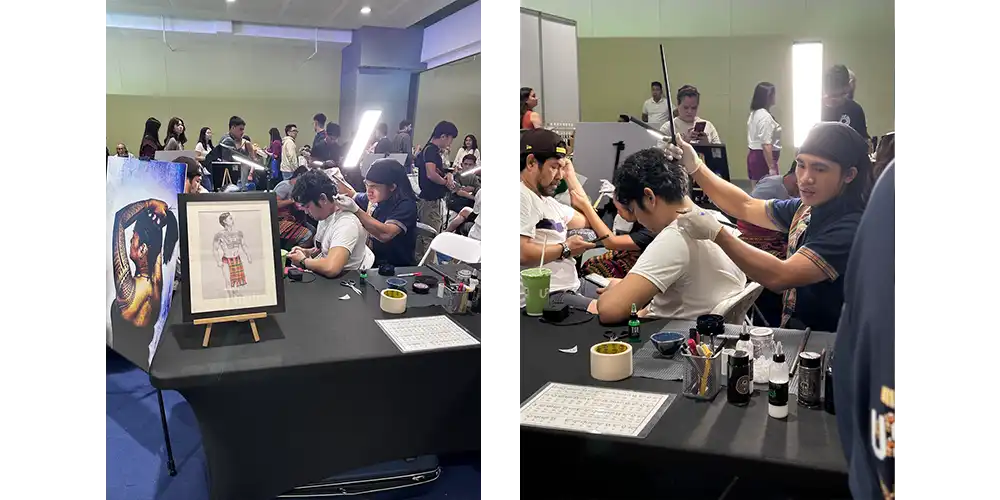
The tattoo booth was the most memorable part of that section. It was run by an artist working under the name Den Traditional Tattoo, doing Kalinga-style batok tattooing with modern hygiene practices layered on top of traditional patterns and technique.
Traditional Kalinga tattoos carry specific meanings — for men, marks of courage and achievements as a warrior; for women, symbols of beauty, maturity, protection, and fertility. Today they’re mostly worn as a marker of cultural identity and heritage rather than earned through the old rites, and interestingly, it’s often people from Manila — far removed from Kalinga itself — who are the ones getting them.
The most famous name in this tradition is Apo Whang-Od, the Kalinga mambabatok (traditional tattooist) from Buscalan village, still working with the old hand-tapped method using bamboo and citrus thorns.
Booths like this aren’t just “get a tattoo” experiences — they’re doing something closer to cultural preservation: introducing people to indigenous Philippine culture, keeping a traditional technique alive, and giving an artist a livelihood built on protecting that culture. That’s about as literal an example of “sustainable living” as this event got.
Manila’s Grab Bag of Vendors
Then there was everything with no obvious connection to the mountains or to coffee. Handmade craft stalls were everywhere, a lot of them run by young vendors selling pins and stickers.
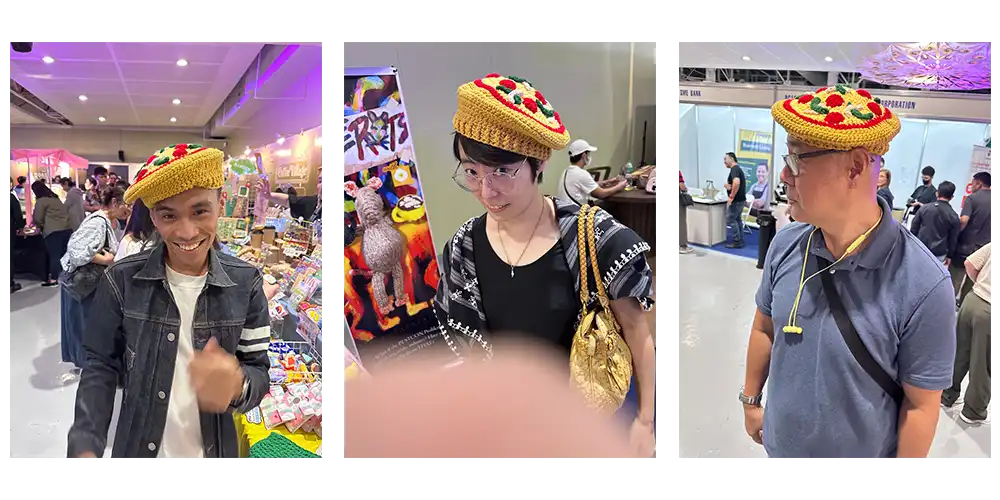
Somewhere in there, I impulse-bought a hand-knit beret with a pizza on top. 580 pesos. It doesn’t suit me, it has nothing to do with coffee, and it’s about as far from “sustainable” as a purchase can get. Neither Ryan, nor my friend Ariel, nor a handful of confused kids standing nearby could talk me out of it.
I also grabbed a small souvenir for Ariel — a mug with a, let’s say, very suggestively shaped handle (I’ll let you picture it). It was meant as a gag gift, but at 2,000 pesos, the price genuinely surprised me. Bought it anyway.
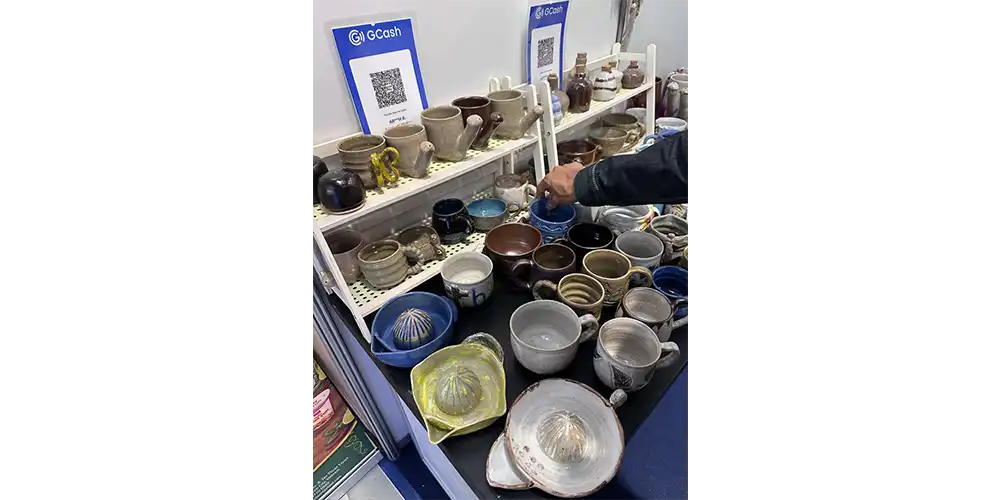
Thinking back on it, fertility and abundance motifs actually show up a lot in Cordillera craftwork. The lingling-o necklace is one example — I own a few myself — and that distinctive shape is traditionally read as representing the womb. Phallic-shaped toys and carvings are also sold pretty casually around the region. In hindsight, that mug wasn’t as random as it felt at the time.
I also ran into Handcrafted by Harl’s, a brand I’ve known about for a while — they actively employ people with disabilities, and everyone there, including the owner, has that kind of quiet toughness to them. Ryan bought a shoulder bag. I tried to talk him out of it — “you already have plenty like that” — but Ariel had already given up on that argument entirely. He ended up paying 2,500 pesos for it.
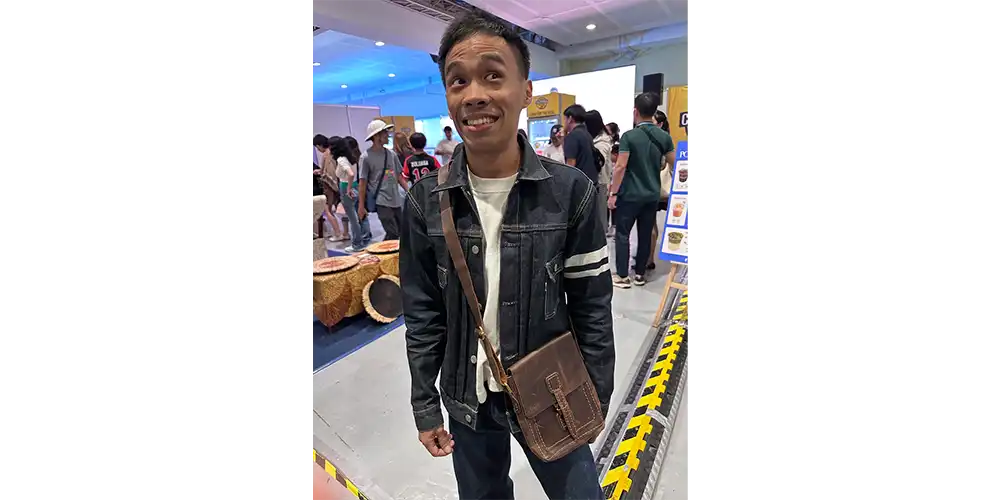
Under one big “Sustainable Living Festival” umbrella, you had coffee, indigenous crafts, and urban craft shops all coexisting pretty loosely. That mess felt very Philippines to me, somehow.
Was 350 Pesos Worth It?
Short answer: yes, easily. Honestly, more than I expected.
Having missed the bigger 650-peso event in June, I went in with low expectations for something priced this low. I wondered how much genuine energy a smaller, cheaper event could have.
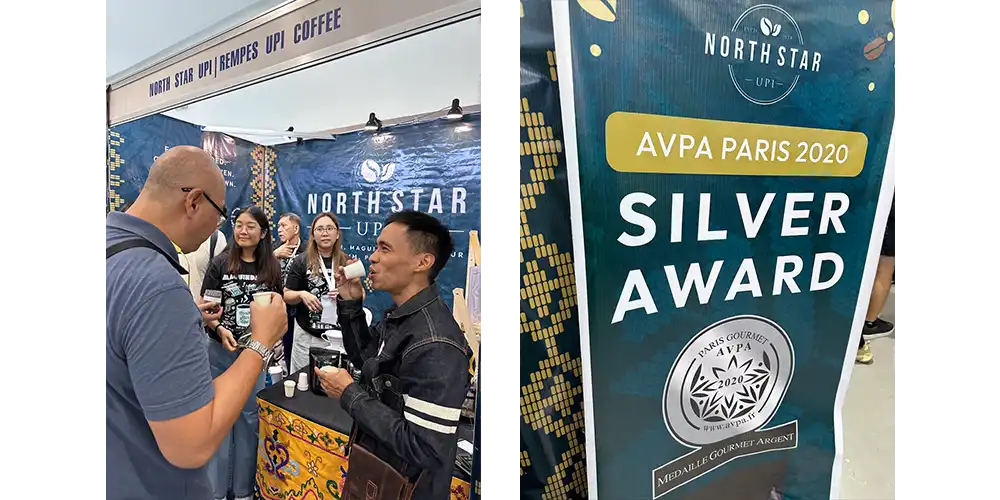
Going with Ariel probably helped. He spent years at a major PR firm in Manila and knows a lot about a lot of things. While I was next to him going “wow, tasty” and “so cute,” he was grilling vendors with real questions and working his way through every sample and tasting on offer.
There were gaps, though. I’d half-hoped to see Amadeo’s own Pahimis coffee represented somewhere, but I never found it — probably the altitude issue I mentioned earlier. Beans skewed heavily toward Mindanao origin overall.
With this much variety on display, I also thought there was room for a Philippine artisanal chocolate maker — there are genuinely excellent ones — to pair with the coffee.
There was a pastry stall too, and it turned out (Ariel asked, half-joking, and got a surprisingly direct answer) they were using cheap supermarket-grade ingredients. For an event built around premium coffee, that felt like a mismatch. Which, honestly, made the absence of the coffee shop I’d been hoping to see a little more understandable.
Next time, I want to check out a bigger version of this kind of event.
Even so, I left genuinely satisfied. Coffee is really just one genre, and you can’t talk about it in isolation from the culture around it — and the same goes the other way: crafts, tattoos, even an impulse-bought beret don’t fully make sense without coffee sitting next to them. This event let me see that kind of coexistence play out in a pretty fun way.
I’m happy with how the day went.
Japanese article :フィリピンのコーヒーイベント「BIYAYA Sustainable Living Festival」に行ってきました


フィリピン(海外生活・情報)ランキング


にほんブログ村