A Video That Started a Very Uncomfortable Conversation
In 2017, American musician David DiMuzio — living in Cebu — posted a video called “Why Filipinos Don’t Get Rich.”
Five million Facebook views later, the internet was on fire.
His argument? Simple: Filipinos who earn well end up financially responsible for everyone around them — parents, siblings, cousins, maybe the cousin’s neighbor’s dog — and never actually get ahead.
Filipinos were not happy. “You don’t understand our culture.” “Family is everything.” “Who are you to say this?!”
But then, quietly, a Filipino left this comment:
Why Filipinos stay poor:
- We don’t plan for the future — retirement, family, kids’ education. We live for today.
- We believe money is the root of evil, and rich people are bad.
- We can’t say no to family or relatives — we don’t want to be seen as matapobre (someone who looks down on others).
- We have this utang na loob mentality — everything provided to us as children must be paid back once we have the means.
Ouch. That one hit differently — because it came from inside the house.
So What Even Is “Utang na Loob”?
Filipino culture runs on two deeply embedded values:
- Utang na Loob (oo-tang nah lo-ob) — literally “debt of the inner self.” The idea that care and kindness received — especially from family — must be repaid. Once you’re earning, supporting your parents isn’t a choice. It’s just… what you do.
- Pakikisama — harmony, cooperation, don’t-rock-the-boat energy. Saying no to family isn’t just awkward — it makes you a bad person, apparently.
Here’s the thing: these values are genuinely beautiful. Filipino communities show up for each other in ways that make a lot of Western cultures look emotionally bankrupt.
But they also create a system where the highest earner becomes the unofficial ATM for everyone else. And that system has some serious bugs in it.
Catholicism, Fathers, and a Baton Nobody Agreed to Carry
About 80% of Filipinos are Catholic — the result of 400+ years of Spanish colonial rule baking it into the culture. The Church’s message? Family is sacred. Protecting your family is an act of faith.
In this framework, the father (Tatay) carries a specific kind of weight. Providing for the family isn’t just practical — it’s moral. A man who can’t support his family carries shame.
And when he can’t anymore? The baton gets passed to the kids. No ceremony, no agreement, no discussion. Just… passed.
Oh, and divorce is illegal in the Philippines (except for Muslims). So once you’re in, you’re in. Forever. Which, as you can imagine, makes the concept of “family obligation” feel even less optional.
The Day My Mother-in-Law Made a “Joke”
I’ve lived in the Philippines with my Filipino husband for over ten years. And I still think about this moment.
His mother came to visit one day, smiled sweetly, and said:
“You know, Kumi… in the Philippines, children can be sued if they don’t take care of their parents. I could sue you both… Woohoo!!”
Ryan immediately developed a sudden intense interest in the wall.
I thought: Nah. That can’t be real. She just… failed at a joke. That’s all.
So I asked my father-in-law — a paralegal — whether this was actually a thing.
“Technically, yes, there are mutual support obligations under family law. But nobody actually does that. Ha ha… ha.”
Yeah. That trailing laugh was very reassuring. Super convincing, thanks.
I just don’t feel like supporting someone who could potentially sue me!!
Then in 2025, a proposed law called the Parents Welfare Act appeared — which would legally require children to financially support elderly parents, with actual legal consequences for those who don’t. It hasn’t passed. But honestly? The fact that it was even proposed says everything about the pressure that already exists unofficially.
(I wrote about navigating this as a foreign spouse here: What It’s Really Like to Marry a Filipino)
The Breadwinner Trap (And It’s Not Just for Kids)
Here’s what a decade in the Philippines has taught me: the breadwinner burden doesn’t only fall on children.
It falls on whoever has the most. Full stop.
As a foreign spouse, I’ve felt that gravitational pull myself. When someone in an extended network earns more — whether they’re a child, a sibling, or a foreign partner — the expectations quietly shift toward them.
I know of foreign men married to Filipinas where the wife’s sister’s boyfriend moved in and just… stayed. Nobody asked. He just materialized and became part of the household budget.
I know of foreign husbands quietly paying for children their wives had before they met — not because they chose to, but because it was never explicitly said they wouldn’t.
One foreign woman I know negotiated a clear rule with her Filipino husband early on: family support comes only from his income, not hers. It required an actual conversation. An uncomfortable one. But it worked.
The alternative — just letting it happen — tends to work out less well.
“I Didn’t Ask to Be Born Into This”
This is where it gets real. A Filipino blogger wrote:
“You owe us because we raised you.” No, you fucking don’t. They chose to bring you into this world — it wasn’t a contract.
:The Toxic Concept of Utang na Loob — Medium (@brylleramos13)
“Saying no or setting boundaries means you are a disappointment, a defiant, a failure, or a shame.”
:Utang na loob, Stop Breadwinning Children — Medium (@Kennnotbenamed)
These aren’t just angry. They represent a generation of Filipinos who are tired — not of their families, but of a system that treats their future earnings as a shared resource before they’ve even started living their own lives.
And then there’s this, from a forum thread that got way too real:
“Make kids now, think about everything else later.”
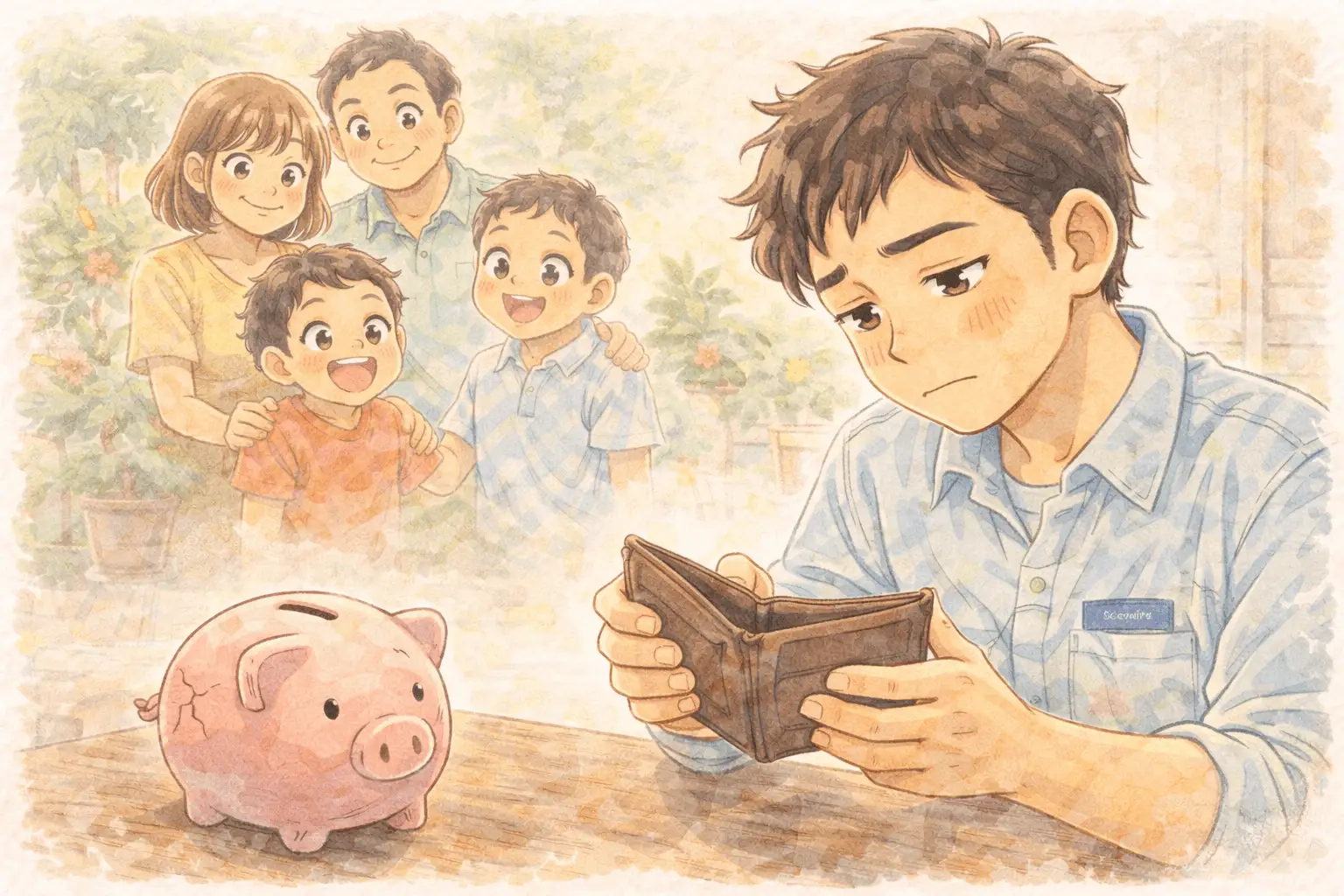
When parents have many children without a financial plan, one kid — usually the most capable, often the eldest — ends up carrying everyone else. They skip their dreams. They delay marriage. They send money home every month and quietly resent it and then feel guilty for resenting it.
And sometimes — this is the part that really gets me — those same parents blame their difficult lives on the children who only exist because of their choices.
This is how poverty becomes generational. Not from laziness. From a structure that ties the capable to the needs of everyone else before they ever had a say.
The Colleague Who Wanted 7-8 Kids (For Retirement)
I once had lunch with a colleague. Smart guy — sharp, analytical, works in business intelligence.
He asked if I had kids. I said no.
He said, without missing a beat:
“You should try everything — even IVF. I want 7 or 8 kids myself. That way, old age is taken care of.”
Not: I want to give children a wonderful life.
Not: I love kids.
Seven or eight children. As a retirement fund.
He wasn’t a villain. He was just stating what, in his cultural framework, is completely logical math. But the children in that equation — their choices, their dreams, their financial futures — weren’t variables he was calculating.
I thought about that conversation for a long time.
Our Own Line in the Sand
My husband’s family is, by Filipino standards, remarkably self-sufficient. They don’t ask us for money. We genuinely got lucky there.
But we’ve still had to draw lines.
His father is a brilliant man — a paralegal with two properties, a car, and skills he could monetize whenever he felt like it. The “whenever he felt like it” part is the issue.
He has a very particular relationship with money. Samsung? Sony? Too mainstream. Apple? Ewww. Instead, he consistently invests in Chinese brands so obscure that Googling them returns zero results. Nobody has heard of them. Nobody asked for them. But he wants them, he likes them, and therefore — he buys them. Repeatedly.
Is it his money to spend? Absolutely. But it does make the idea of financially supporting him feel a little… complicated.
We don’t fund that lifestyle. What we do instead:
- Treat the family to a meal when we want to
- Give gifts when we actually have the means
- Pay his father a proper professional fee when we use his legal expertise — because respect goes both ways
It’s a balance between warmth and clarity. Love with a budget.
Because the family I protect first is the one I chose — my husband, our dogs, our cats, and our quiet, deliberately-built life together.
Something Is Shifting
Across Filipino social media, a new vocabulary is emerging:
“Support with boundaries.”
“You can love your family without losing yourself.”
“Being the breadwinner shouldn’t be a lifelong punishment.”
This isn’t anti-family. It’s people trying to find a way to honor where they come from without being consumed by it.
Utang na loob and pakikisama aren’t bad values. But there’s a real difference between gratitude freely given and debt that never expires.
There’s a difference between helping someone and enabling a system that was never fair to begin with.
Final Thoughts
Living in the Philippines has genuinely changed me — in good ways. The warmth here is real. The resilience is extraordinary. The way people show up for each other in hard times is something I deeply admire.
But warmth without limits becomes weight.
And the heaviest weight is usually carried by the people who never agreed to carry it — the kid who gave up their dreams quietly, the sibling who never got to save for themselves, the foreign partner who became part of an unspoken arrangement.
Loving your family and protecting yourself are not opposites.
That’s the conversation the Philippines is slowly, bravely starting to have.
And honestly? It’s about time.
For a deeper look at what happens to OFW remittances in practice, read Why OFW Mansions in the Philippine Provinces Are Slowly Falling Apart.

Japanese’s article is here👉 https://pinashaponlife.com/culture/family-support/